
Affordable PWM battery charging control circuit
Description and small modification for greater reliability of the W88 charging regulator
To regulate the charging of a photovoltaic panel equipped with a solar tracker, in accordance with the most economical choices, we opted for the TYPE W88 solar charge controller (available in the W88-A, W88-B, W88-C variants). It is a very economical device, even less than $5 including shipping, which uses PWM technology to manage small photovoltaic systems.
It automatically recognizes 12V or 24V systems and is typically sold in current ratings ranging from 10A up to 30A (or higher). It is made and marketed by many Chinese manufacturers with slight aesthetic variations.
Type W88 Solar Charge Controller: Complete Guide, Operation, Benefits, and a Quick Hack
This W88 solar charge controller is one of the most widely used devices in small off-grid photovoltaic systems thanks to its ease of installation and numerous integrated features. This controller is often chosen for campers, boats, solar lighting systems (the system configuration I'll be using), storage batteries, and small home systems powered by photovoltaic panels.
The primary purpose of a solar panel charge controller is to properly manage battery charging from the solar panel, preventing overcharging, deep discharge, and system damage. Without a charge controller, the battery would rapidly deteriorate due to overcharging, posing safety issues.
The W88 model is available in various versions, generally 10A, 20A, and 30A, and is compatible with 12V and 24V systems. It uses PWM (Pulse Width Modulation) technology, in my case I opted for the 10A model ideal for managing one or a maximum of two medium-power 12-volt solar panels.
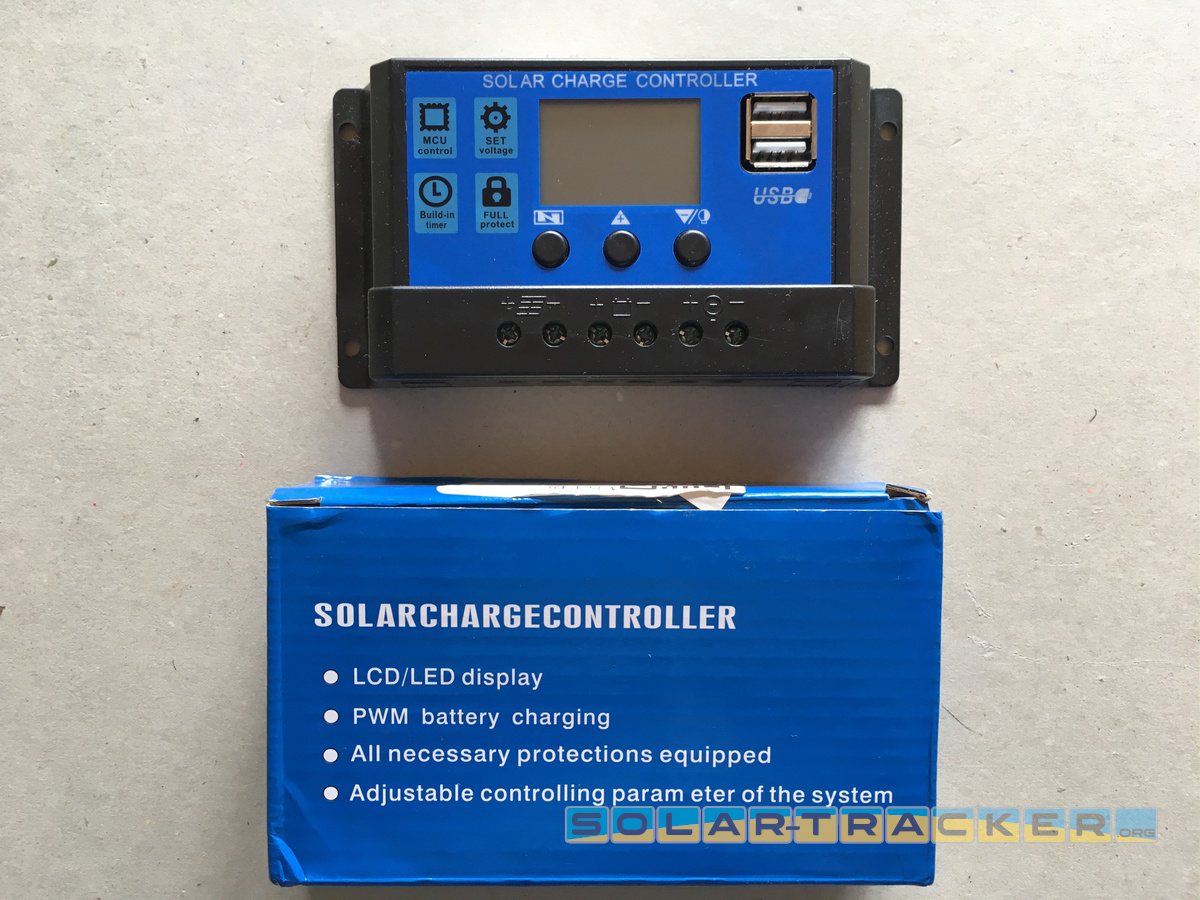
How the W88 regulator works
The W88 charge regulator connects between the solar panel and the battery. Its operation is relatively simple:
- It receives energy from the photovoltaic panel.
- It monitors the input voltage.
- It regulates the current flowing to the battery.
- It stops or reduces charging when the battery is full.
The PWM technology used by the W88 charge controller allows for intelligent charging current modulation. When the battery is low, the controller delivers more current; when the voltage reaches the optimal level, the controller gradually reduces the charge.
Main Features of the W88
Among the most interesting features of the W88 controller are:
Automatic 12V/24V compatibility
Integrated LCD display
USB ports for smartphone charging (the instructions for 2.5A output on my model do not reach 1A)
Overload protection
Reverse polarity protection
Short circuit protection
Backflow prevention function
Automatic charging control
According to the technical specifications available online, the 10A W88-A model supports voltages up to 50V and a maximum power of 130W on 12V systems and 260W on 24V systems.
The LCD display is a welcome addition, allowing you to easily monitor:
battery voltage, charge status, energy produced by the panel, status of the connected load.
Installing the W88 Regulator
Installing the regulator is fairly simple, even for non-technical users. However, it is essential to follow the correct connection order provided in the instructions.
Proceed as follows:
Connect the battery to the regulator.
Connect the solar panel.
Connect any output loads.
Following this sequence prevents automatic voltage detection errors and damage to the regulator.
The regulator has terminals identified by: battery symbol, panel symbol, bulb or load symbol.
It's necessary to use cables of adequate cross-section and install protective fuses to increase the system's safety.
Before use, I disassembled the regulator out of curiosity to see its components and how the cooling was managed. Unfortunately, as expected, it was clear where savings were made to keep the price so low. Basically, the MOSFETs, in my case the good Huayi electronics HY3008P --datasheet-- are bent after soldering with the idea of having them rest on the rear panel, which is also very thin. The result, having no fixing screw, is that the MOSFETs don't rest on the panel at all (see photo). This, in demanding usage situations, can lead to overheating/burning of the MOSFETs.
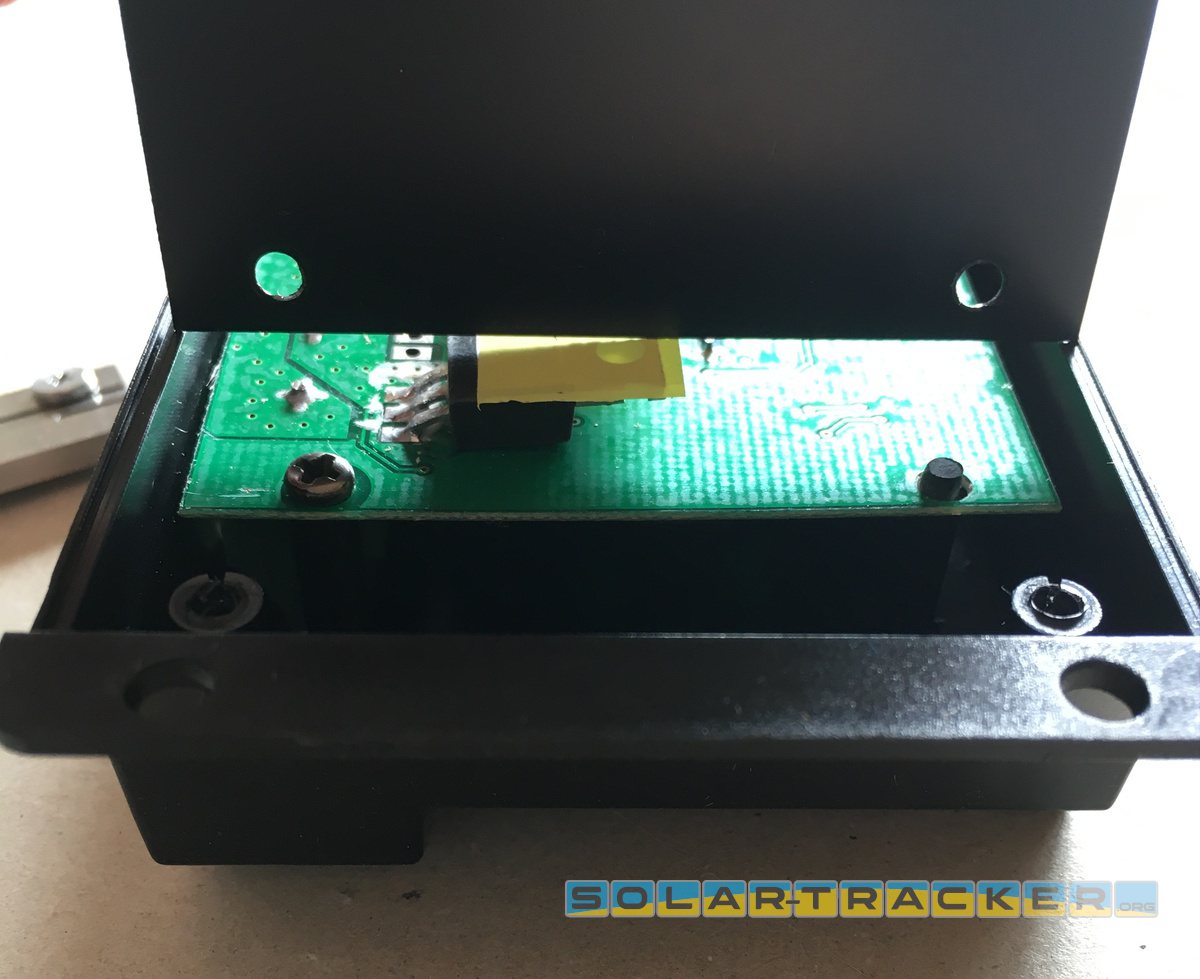
To overcome this problem, I made a small modification using a thin plastic strip with threaded holes, matching the corresponding holes on the heatsink plate. Once screwed in, the structure forces the MOSFET's heatsink surface into proper contact with the plate itself (pay attention to the length of the screws and the insulation between the MOSFETs).
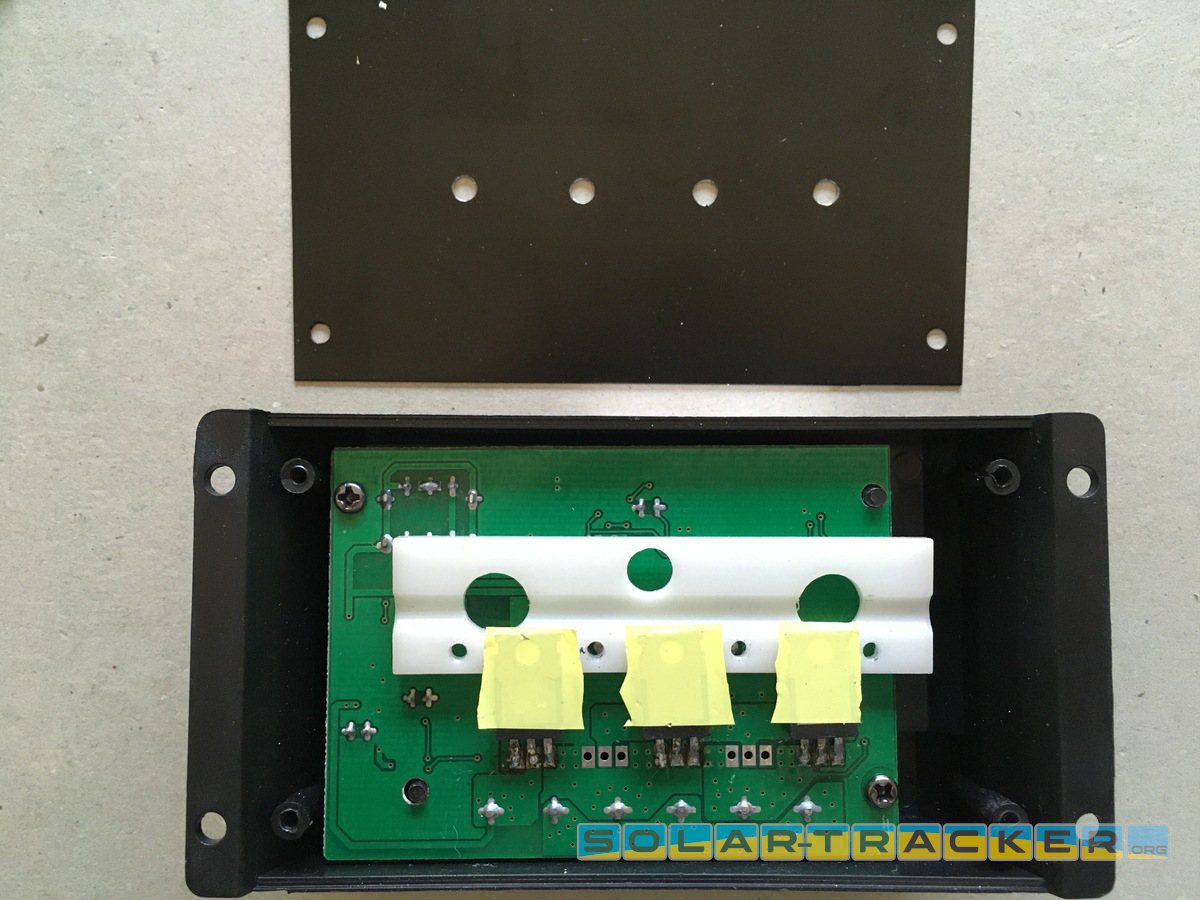
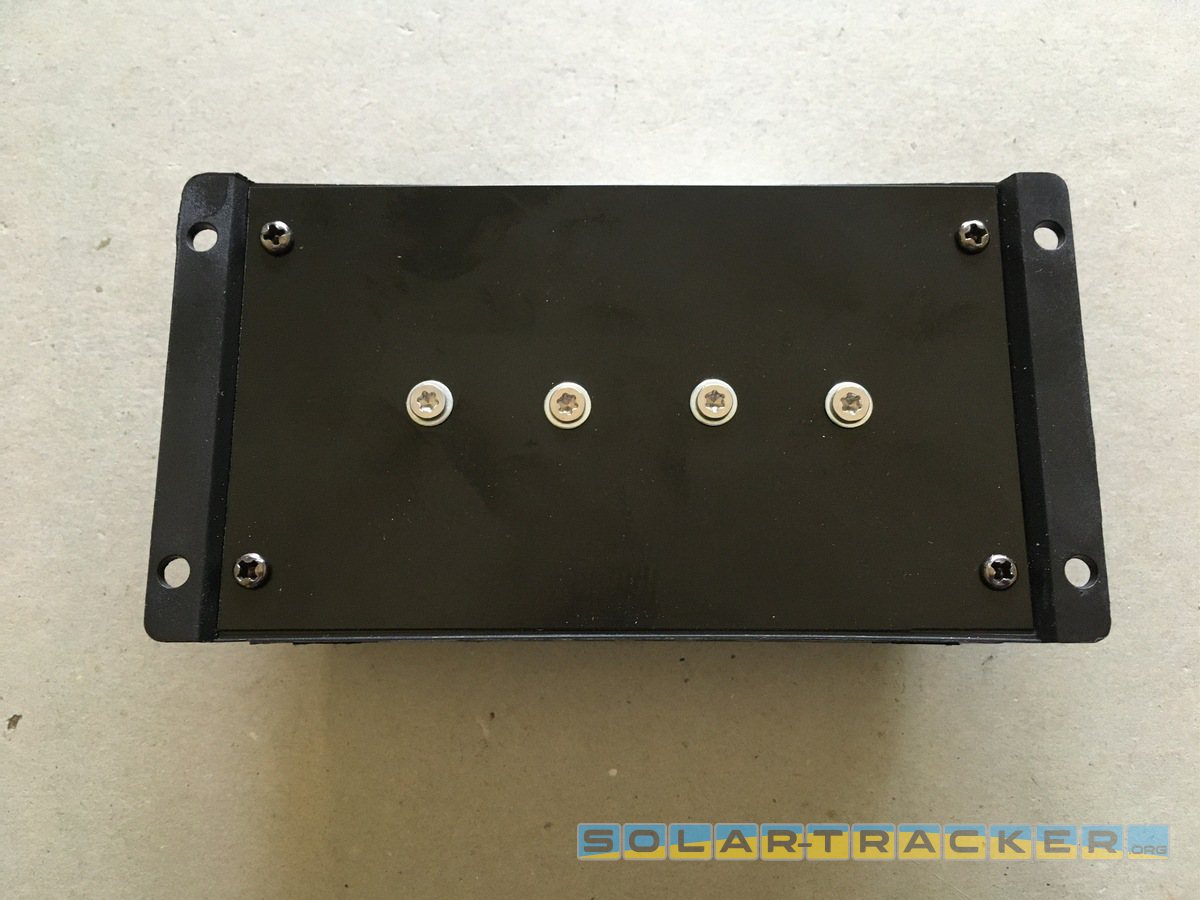
Of course, it's not the best. The ideal solution would have been to extend the MOSFET pins outside by attaching them to a real aluminum heatsink. In my system, given the low power involved, the solution I used on my regulator may be sufficient. However, in general, I recommend everyone to make some modifications to improve the MOSFET heatsink, as it is normally practically non-existent.
Compatible Battery Types
The W88 regulator generally supports: AGM, GEL, traditional lead-acid batteries.
Some models allow you to select the battery type directly from the menu. Charging voltages vary based on the technology used.
The W88 regulator is generally not suitable for lithium batteries, because low-cost PWM regulators do not correctly manage the charging profiles of LiFePO4 or lithium-ion cells.
As already mentioned, this regulator model was chosen for several advantages: its excellent value for money. It is a very economical controller yet reliable enough for simple systems.
Among the main advantages are: low cost, ease of use, quick installation, intuitive display, integrated USB ports, basic electronic protections.
Furthermore, its low internal consumption, declared at less than 10mA, helps limit energy waste.
Given its low cost despite its numerous advantages, the W88 also has some limitations.
PWM Technology
The main limitation concerns PWM technology. Compared to more advanced MPPT controllers, PWM offers lower energy efficiency, especially in low-light conditions or with high-voltage panels.
-MPPT controllers can increase energy yield by as much as 20-30% compared to PWM models.
-Variable Quality Because it is a very affordable product and distributed by numerous brands, quality can vary significantly from one manufacturer to another.
-Limited Power The W88 is only suitable for small systems. For larger photovoltaic installations, it is better to use professional MPPT controllers.
A few notes on the differences between PWM and MPPT solar charge controllers
Many users new to solar panel charging systems wonder what the difference is between a PWM controller like the W88 and an MPPT controller.
PWM: cheaper, simpler, ideal for small systems.
The MPPT optimizes panel power, improves efficiency, works better at low temperatures, and is suitable for larger systems.
That said, for a small RV or lighting system, the W88 may be more than sufficient. For larger home systems, however, an MPPT is the better choice.

 Privacy Policy